Table of Contents
In the high-stakes world of product development, speed is often prioritized over precision. Entrepreneurs, driven by the desire to be first-to-market, frequently view prototyping as an expensive detour rather than a critical milestone. This is a fundamental misunderstanding of the manufacturing process.
In reality, prototyping is not a cost; it is an insurance policy. Skipping this stage to "save money" is one of the most expensive logical fallacies an inventor can commit. Here is the clinical breakdown of how prototyping protects your capital.
The Tooling Trap: The $50,000 Error
For many physical products, the transition from design to mass production involves "tooling" - the creation of heavy-duty steel or aluminum molds (injection molding) or specialized jigs.
- The Risk: A high-quality injection mold in Australia or overseas can cost anywhere from $10,000 to $100,000. If you move straight from a CAD drawing to tooling and discover that a snap-fit is 0.5mm too loose, the mold may be rendered useless.
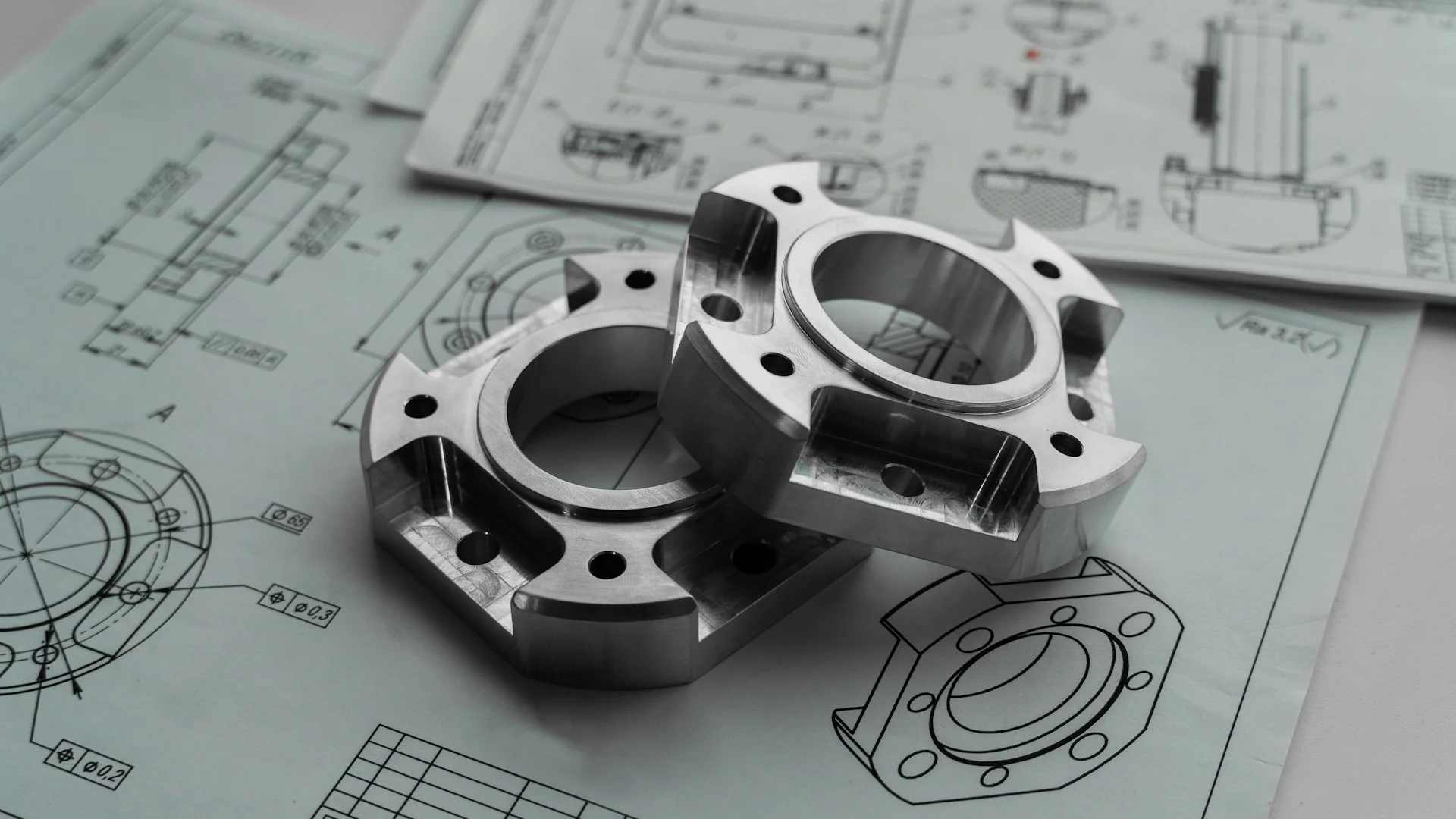
- The Saving: A $500 high-fidelity 3D print or CNC-machined prototype allows you to test that snap-fit physically. Spending $500 to verify a design prevents a $50,000 "write-off" when the steel starts cutting.
Preventing the "Recall Ripple Effect"
Product failure in the laboratory is a learning opportunity. Product failure in the hands of 5,000 customers is a financial catastrophe.
- The Risk: Without rigorous physical prototyping (and "torture testing"), material fatigue or ergonomic flaws remain hidden. If a product breaks during use, the Australian Consumer Law (ACL) mandates repairs, replacements, or refunds - not to mention the potential for liability claims and brand damage.
- The Saving: Prototyping allows for destructive testing. By breaking a prototype under controlled conditions, you identify the "Point of Failure" early. Fixing a structural weakness in a digital model costs nothing; fixing it after a product launch can bankrupt a startup.
The "CAD vs. Reality" Gap
Computer-Aided Design (CAD) is a perfect environment. It does not account for the subtle variabilities of the real world: the way heat affects plastic shrinkage, the friction between two moving parts, or the way a human hand actually grips a handle.
- The Action: Low-fidelity prototyping (using cardboard, foam, or basic 3D prints) allows for immediate ergonomic feedback.
- The Saving: Identifying that a button is "fiddly" or a handle is unbalanced during the prototype phase saves months of redesign time. In the world of manufacturing, time is money - specifically, "burn rate." Every month spent fixing a design post-launch is a month of overhead without revenue.
Optimization of Unit Costs
Prototyping isn't just about finding mistakes; it’s about finding efficiencies.
- The Roadmap: Through iterative prototyping, you may discover that a part can be simplified, or that two components can be merged into one.
- The Saving: If a prototype iteration allows you to shave $1.50 off the manufacturing cost of a single unit through better design, and you plan to sell 20,000 units, that one prototype has effectively "earned" you $30,000 in additional margin.
Securing Investment with Tangibility
In the Australian investment landscape, "De-risking" is the word of the day. Investors are historically wary of "paper-only" inventions.
- The Logic: A founder asking for $200,000 with nothing but a pitch deck is a high risk. A founder asking for $200,000 with a functional prototype and a report on its testing failures and subsequent fixes is a professional.
- The Saving: A prototype reduces the "equity cost" of your capital. By proving the concept works, you negotiate from a position of strength, often retaining more of your company because you have moved past the highest-risk phase of the project.
The Bottom Line
The cost of a prototype is measured in hundreds or thousands of dollars. The cost of a manufacturing mistake is measured in tens of thousands of dollars, lost reputations, and failed businesses. If you cannot afford to prototype, you cannot afford to manufacture.
By investing in the "fail fast, fail cheap" philosophy of prototyping, you ensure that when you finally hit the "Go" button on production, the only surprise you encounter is how smoothly the launch proceeds.