Router Box Machining
Engineering the right process - from heavy-duty CNC fixtures to dialled-in laser settings on fire-retardant polycarbonate.
What needed to be solved.
The customer needed off-the-shelf die-cast polycarbonate enclosures modified to house a network router and power supplies for deployment across remote community installations. Each box required a consistent pattern of cutouts - cable entry ports, antenna connectors, and mounting hardware - with mesh fitted internally to prevent insect entry.
The brief was clean, repeatable results across multiple batches to suit a staged project rollout.
How we solved it.
The project called for standard die-cast polycarbonate enclosures modified to house a network router and power supplies, destined for deployment across remote community network installations. Each box needed a repeatable set of cutouts - cable ports, antenna connectors, mounting hardware - with mesh fitted internally to keep insects out. Because the enclosures are cut open, the original sealed rating no longer applies; the mesh handles that role instead.
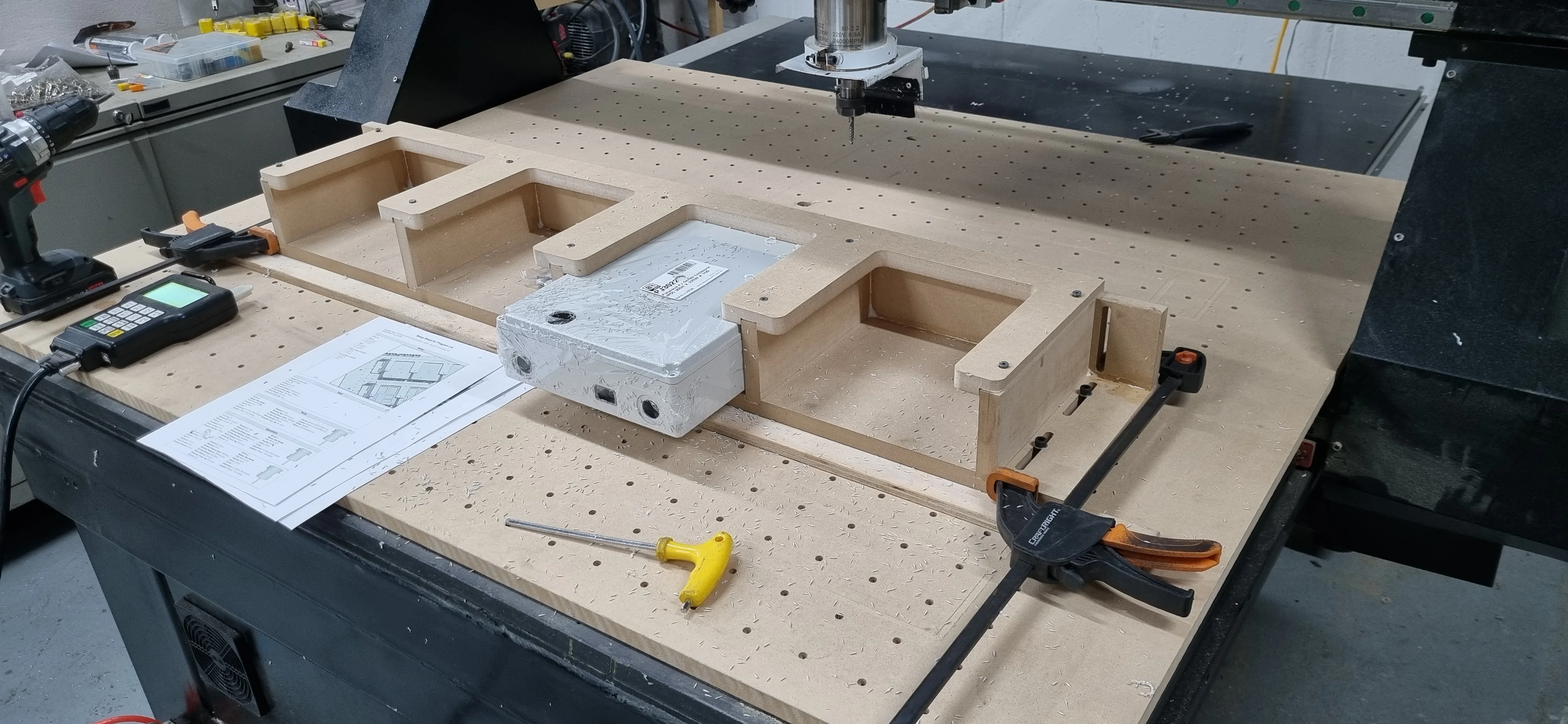
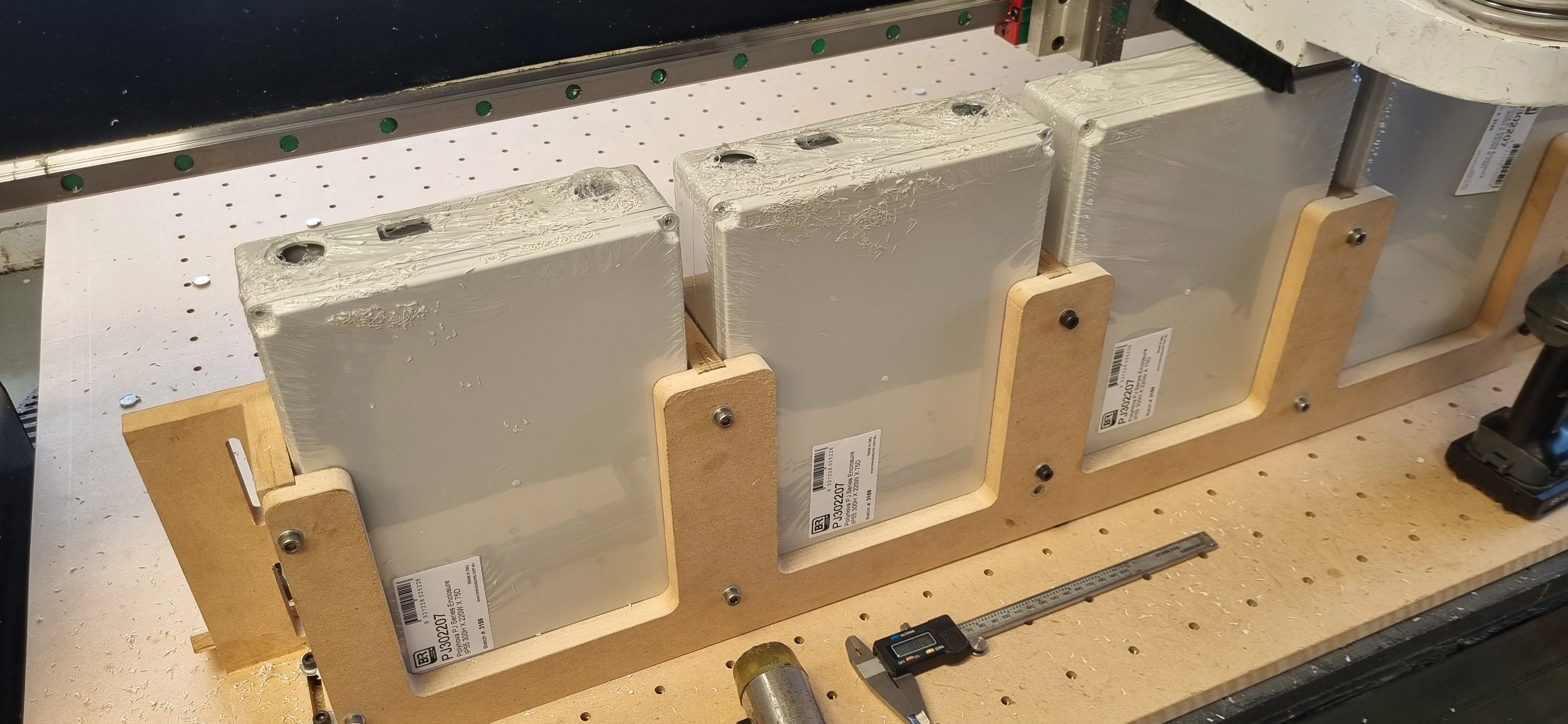
The first batch was produced on our in-house CNC router. Polycarbonate flexes and moves under a spinning tool, so the holding fixtures had to be built solid - substantial enough to resist the lateral cutting forces without letting the enclosure shift or rock mid-cut. The jigs performed, but they were working hard for it, and the wear accumulated over the run.
CNC machining - side view
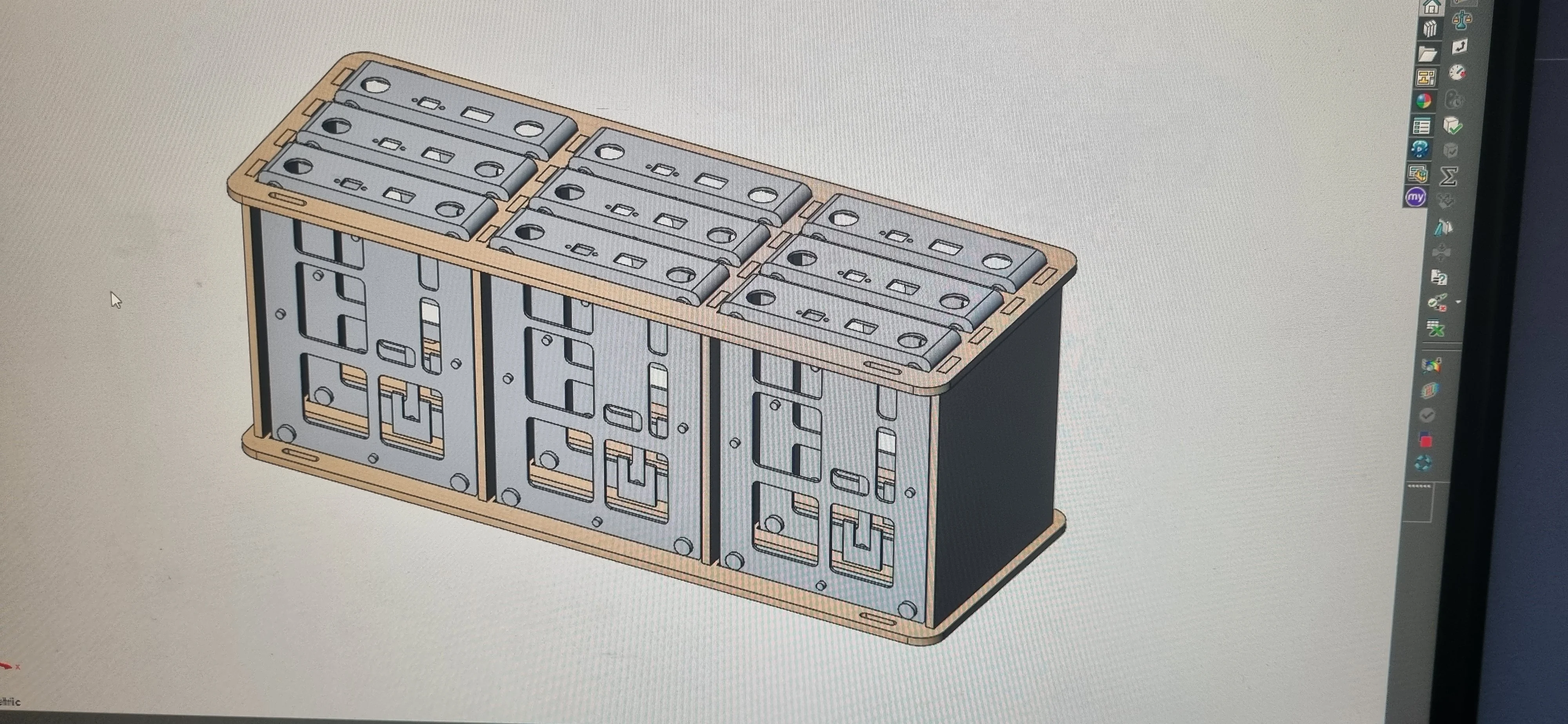
We trialled CO2 laser cutting during that same batch. The first hurdle: these enclosures are made from fire-retardant polycarbonate, which resists burning by design - run standard laser settings and the material chars and stalls rather than cutting through cleanly. Getting consistent results meant working through the parameters methodically - power, speed, passes, focus - until the cut was right across the full thickness.
Once dialled in, the improvement was clear. Laser-cut edges were sharper and burr-free, cycle time dropped, and there were no plastic chips to clear from the machine or the parts. With a router, chips end up everywhere and the jigs take a beating from every run. With no tool contact, the laser setup stays clean and the holding fixtures last indefinitely.
Laser cutting - overview
Laser cutting - close up
Multiple batches have since been completed on the laser to match the customer's staged project rollout. Each run pulls from the same saved cutting file - no re-proving, no variation, just consistent results at whatever volume is needed.
Measurable outcomes.
The first batch was produced on our CNC router using purpose-built holding fixtures - built heavy to handle the lateral forces involved in cutting polycarbonate. We trialled CO2 laser cutting during that same run, which introduced its own challenge: fire-retardant polycarbonate resists burning by design, so standard laser parameters won't cut cleanly. Once the right settings were dialled in, the results were sharper edges, faster cycle times, and no plastic chip mess to manage.
All subsequent batches have been run on the laser - consistent, repeatable, and scalable to whatever volume the project requires.
Long-term impact.
Two problems had to be solved to get this process right: jigs robust enough to handle CNC routing forces, and laser parameters that would cut cleanly through fire-retardant polycarbonate without charring. Once both were sorted, the laser was clearly the better long-term process - faster, cleaner, and far less wear on the tooling setup between runs.
Have a similar project?
Ready to start
your project?