Terracotta Air Vent Reproduction
From broken original to reusable mould - reverse-engineered and scaled to the tolerances of a kiln.
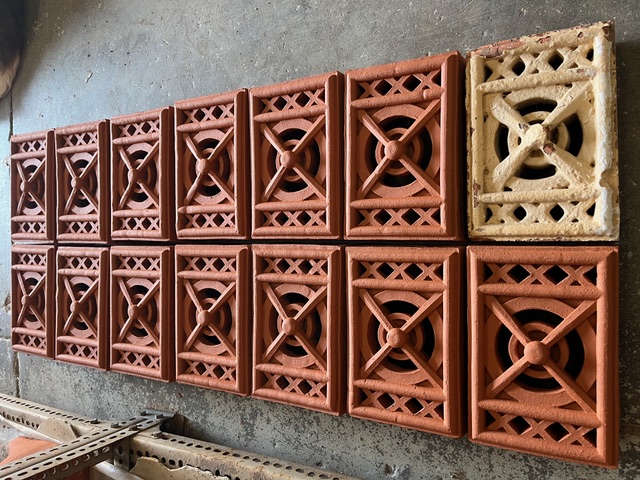
What needed to be solved.
Gargoyles and Dragons, a specialist in decorative architectural ceramics, had been commissioned to reproduce a set of discontinued heritage terracotta air vents. They wanted to use 3D printing as part of the process - a digitally precise master rather than a hand-sculpted one - and came to us to make it happen.
The only starting point was a broken original. No drawings, no manufacturer, no reference dimensions. And unlike a straight reproduction, the master had to be engineered specifically for a ceramic workflow: clay shrinks in the kiln, mould geometry behaves differently to finished-part geometry, and the output needed to be a physical master that a plastic mould could be pulled from and reused across many production runs.
How we solved it.
Gargoyles and Dragons were commissioned to reproduce a set of heritage decorative terracotta air vents and came to us to bring 3D printing into their production workflow. Rather than hand-sculpting a master from scratch, they wanted a digitally precise starting point - one that could be verified against the original before anything was made.
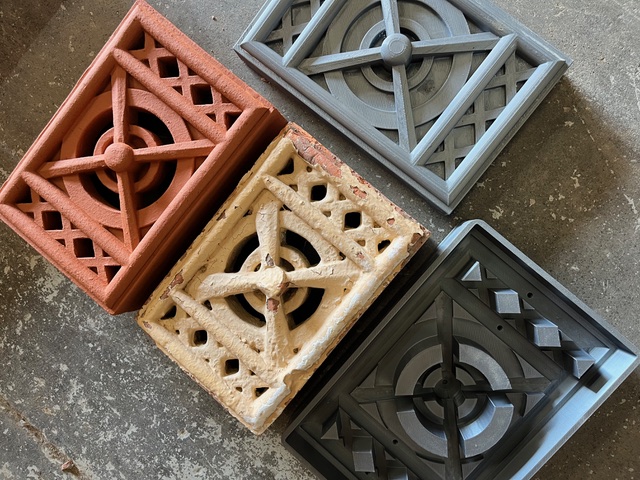
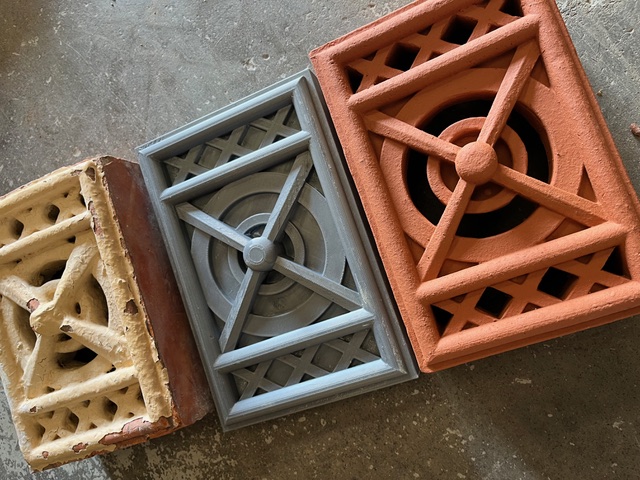
We were handed a broken original and got to work. The piece was fully measured - face pattern, profile, wall thickness, overall geometry - and reconstructed in CAD as a clean digital model. Once we were confident the model accurately represented the original, the real work began.
A straight digital copy wouldn't serve a ceramic process. Two deliberate changes had to be made before the master was print-ready. The first: the vent apertures were sealed in the model. When forming clay into a mould, open geometry locks the clay in place and makes release impossible - so the apertures are left solid in the master and opened by the client after the piece is formed and fired. The second change was scaling. Clay shrinks as it dries and contracts further when fired in the kiln - how much depends on the specific clay body and firing temperature. Working closely with Gargoyles and Dragons, we applied the correct scale factor to the model so the finished terracotta piece would come out at the right dimensions, not the master dimensions.
With the model signed off, it went to our FDM printer. The printed part is not the finished product - it's the physical master used to cast a plaster negative mould from. That mould is what Gargoyles and Dragons press their terracotta into, and it can be used over and over without going back to the digital file.
The result is a reusable production tool built for their specific process - accurate to the original, adapted for the kiln, and ready for however many runs they need it for.
You can see more of Gargoyles and Dragons' work at gargoylesanddragons.com.au.
Measurable outcomes.
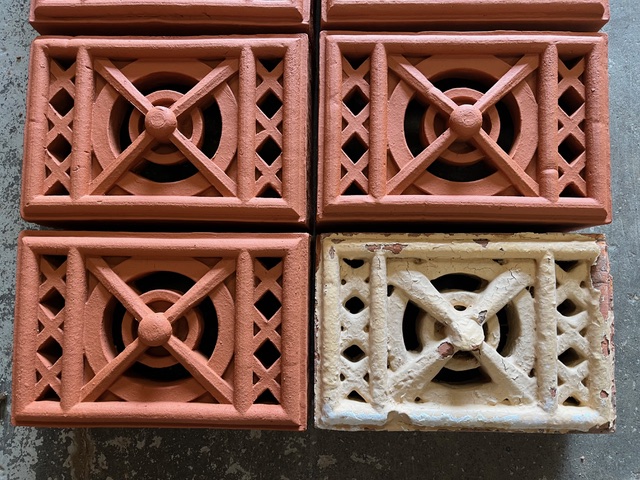
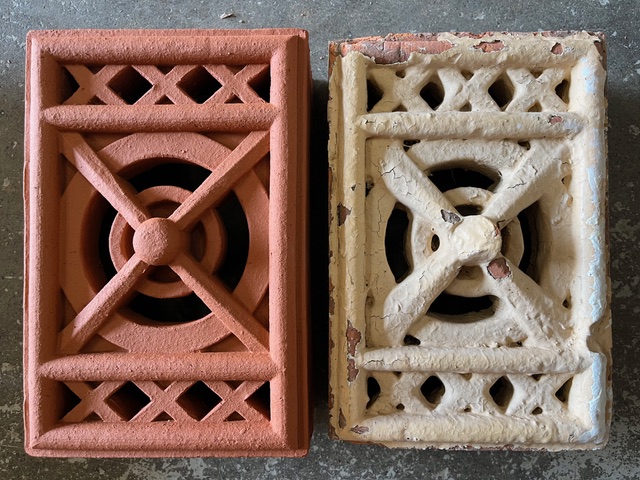
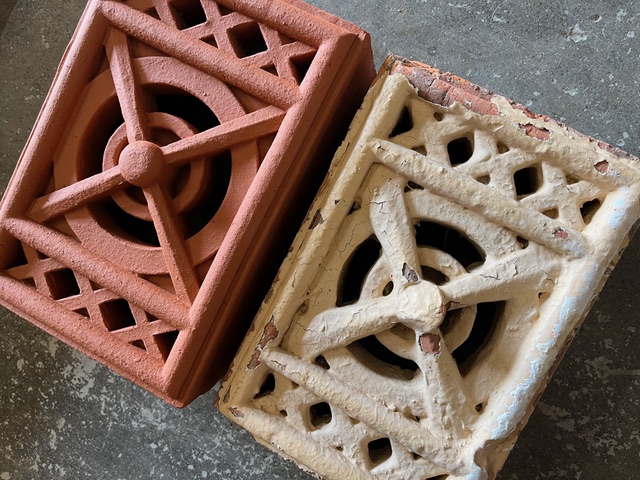
The 3D-printed master was reviewed alongside the original, approved, and handed to Gargoyles and Dragons to produce their plastic mould from. The mould is reusable across multiple runs, and the digital model is on file if scaling or geometry needs to be revisited for a different clay body or firing temperature in the future.
Long-term impact.
The interesting part of this job was learning the ceramic process backwards from the finished piece. Every decision in the CAD model - the scale factor, the surface treatment, the sealed apertures - was made with the kiln in mind, not just the original vent. Understanding the client's craft and how their materials behave was what made the digital model actually useful to them.
Have a similar project?
Ready to start
your project?